Your Ultimate Masai Mara Honeymoon Safari: A Planning Guide
5 days/4 Nights *
From $870 - $1215 per person
MASAI MARA HONEYMOON PACKAGE 2024
The Masai Mara Honeymoon Safari Adventure
The Masai Mara is a fantastic place for a honeymoon, especially for those who love animals! This beautiful location is famous for its wide variety of wildlife and the romantic feel of being in nature.
But why have a regular safari? You can create a special Masai Mara adventure to make your honeymoon unforgettable. In this wild paradise, you and your new spouse can really connect with nature.
How long should I plan my safari for?
A perfect honeymoon safari in the Masai Mara should last about 2 to 4days. By spending two or three nights in Masai Mara, you can fully enjoy every little experience that the place has to offer.
This way, you can truly experience the unique beauty of each place. One day, you might see a lion surveying the savanna. The next day, you could see a leopard stalking prey at sunrise. Nature is just so unpredicatable.
When is the best time to go for a honeymoon in Masai Mara
The best time to visit the Masai Mara is during the dry season, from June to October. During these months, many animals gather at rivers and watering holes, making it easier to see them.
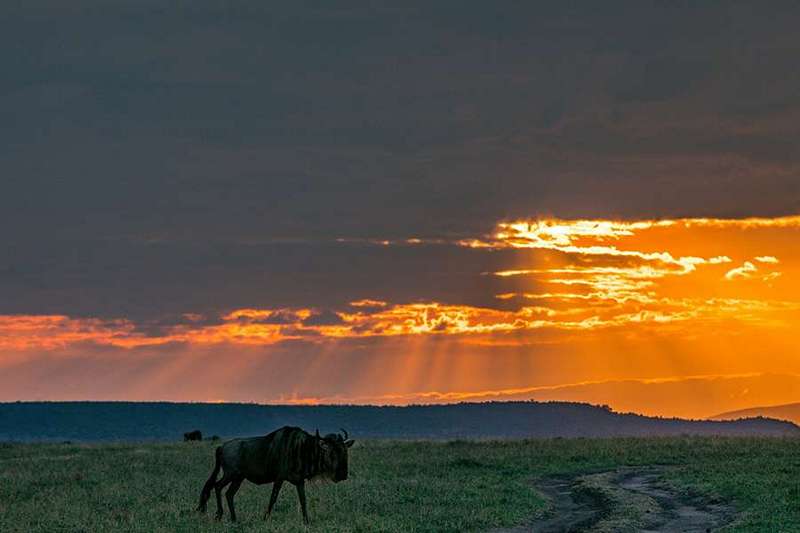
The dry season also means sunny days and clear nights, perfect for exploring and enjoying the beautiful landscapes together. You can enjoy stunning sunrises and sunsets, making your honeymoon extra special.
So, plan your Masai Mara honeymoon safari during the dry season for an amazing and romantic adventure!
What are the weather conditions like in Masai Mara?
The weather in the Masai Mara changes with the seasons. From June to October, it’s warm during the day (around 81°F/27°C) and cool at night (below 50°F/10°C).
For your packing list, bring clothes for both warm days and cool nights. Light layers for daytime and warmer layers for evenings are recommended. Essentials like sunscreen, a hat, sunglasses, and insect repellent are a must.
During the dry season, days are perfect for exploring, but nights can get chilly. Dress in lightweight clothes during the day and pack sweaters or jackets for the evening. This period is ideal for a honeymoon safari, offering pleasant weather and stunning wildlife sightings. With the right gear, you can enjoy every romantic moment in this beautiful Kenyan setting.
Your Honeymoon Haven: Why Masai Mara is the Ultimate Choice
Your honeymoon is a special celebration, and a honeymoon safari offers the perfect mix of adventure, intimacy, and unforgettable moments. Here’s why it’s the best choice for a romantic getaway:
Romantic Moments: On a honeymoon safari, it’s just the two of you. Enjoy intimate picnics in beautiful landscapes, share quiet moments by the campfire, and let the stunning African wilderness enhance your love story.
Flexibility: This is your adventure, and you control the pace. Spend hours watching a lion pride, follow your own wildlife interests, or simply relax together. Your itinerary will be designed to match your wishes.
Capturing Memories: A honeymoon safari is perfect for photography. With no crowds, you can capture amazing shots – just the two of you against a fiery sunset or thrilling close-ups of the wildlife.
Worth the Cost: Honeymoon safaris are more expensive, but they offer great value. You get personalized attention, a tailored experience, and the chance to create precious honeymoon memories without distractions.
A honeymoon safari in the Masai Mara is the ultimate romantic escape, giving you and your partner an unforgettable start to your life together.
Your Masai Mara Honeymoon: Activities for lovebirds
The Masai Mara is a great place for couples on their honeymoon. You can see amazing animals and enjoy beautiful views. Here are some cool things you can do:
- Ride in a hot air balloon: Picture yourself floating in a balloon over the plains as the sun rises. It’s super romantic!
- Have a fancy dinner: Imagine having dinner outside under the stars, with just the two of you. You can listen to the sounds of animals while you eat.
- Look at the stars: The sky in the Masai Mara is really clear, so you can see lots of stars. You can snuggle up and talk about your dreams.
- Take a walk: Go for a guided nature walk that will teach you about the plants and animals found in Siana Conservancy. It’s a fun adventure to do together.
- Visit a Maasai village: Meet people from the Maasai tribe and learn about their culture. You can even try making fire the traditional way.
Frequently asked Questions About the Masai Mara Migration Package
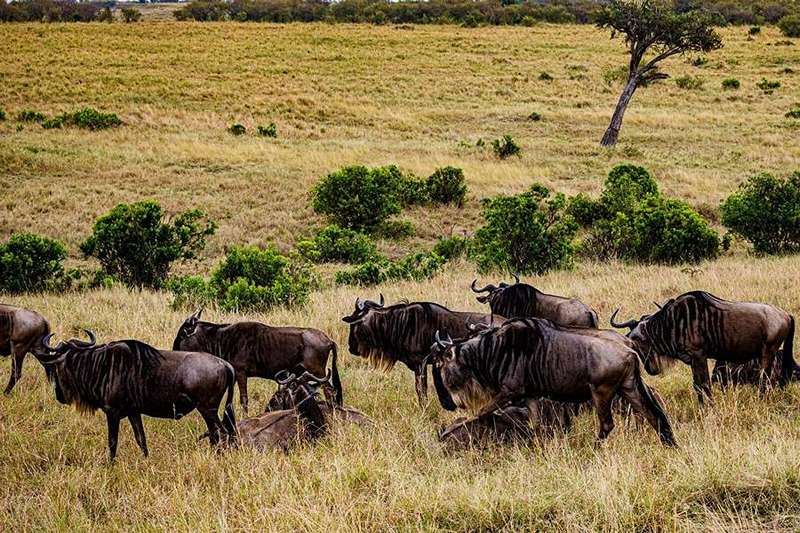
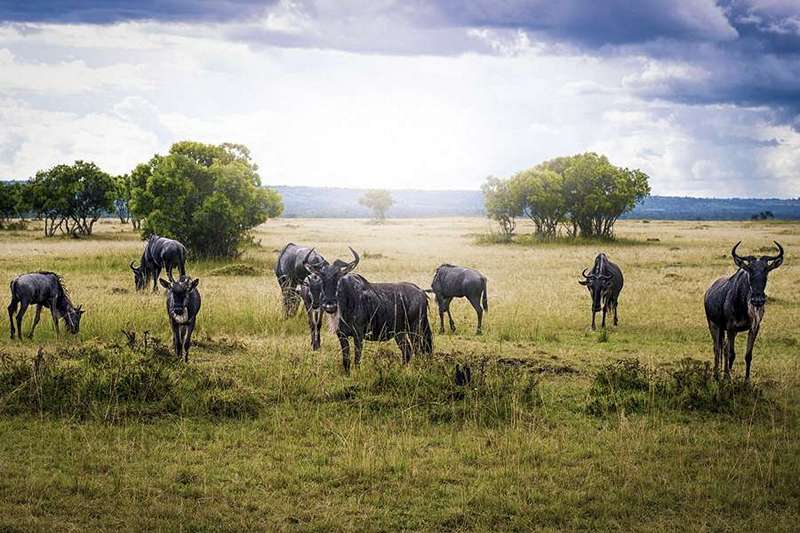
The Masai Mara migration, also known as the Great Migration, is an awe-inspiring natural event where an estimated 1.5 million wildebeest, along with nearly a million zebras, topi, and eland, migrate in a circuit between the Serengeti in Tanzania and the Masai Mara National Reserve in Kenya. This migration is the largest movement of animals on the planet and its exact route changes every year, showcasing the unpredictability of nature. The herds must cross the Mara and Talek rivers, where many face danger from Nile crocodiles and other predators, making this journey one of the most challenging and thrilling for any animal in the world.
The spectacle of the Masai Mara migration occurs within the Masai Mara National Reserve, which covers a vast 1,510 square kilometers of grasslands stretching north from Tanzania’s Serengeti. This migratory journey begins in the Ngorongoro Conservation Area in the southern Serengeti of Tanzania, winds its way through the Serengeti, crosses into Kenya’s Masai Mara, and finally loops back again.
Every year, a magnificent drama unfolds on the plains of the Masai Mara – the great wildebeest migration. But hold on, predicting its exact timing is like catching a shooting star – it requires a dash of luck and a whole lot of anticipation.
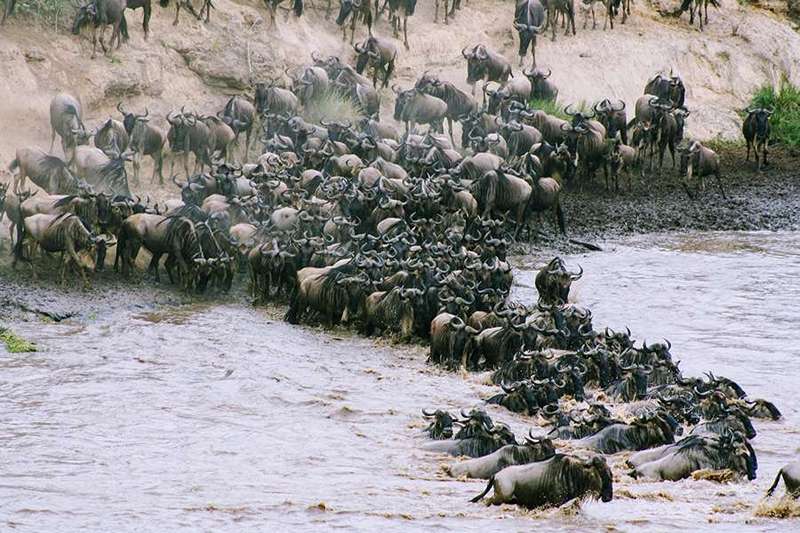
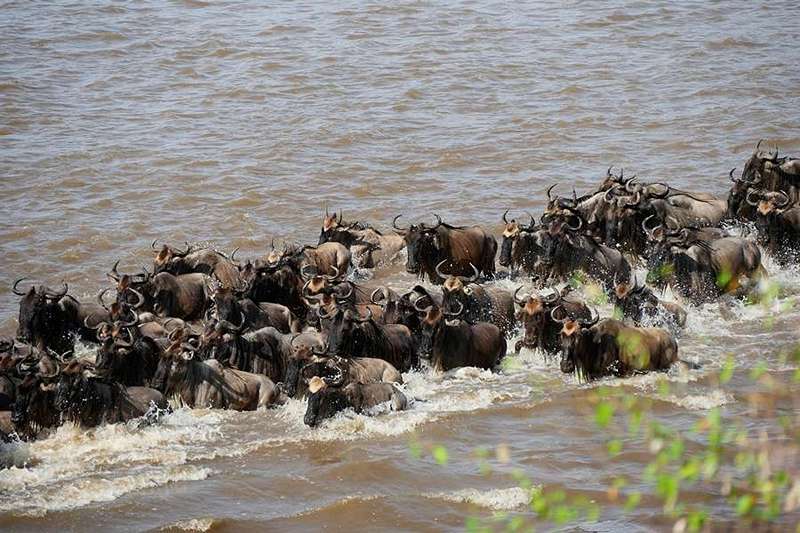
Typically, the first whispers of movement arise around July when large herds of wildebeest gather at the Serengeti’s northern edge, their eyes set on the lush pastures of the Mara. Then, between July and late October, they embark on a series of daring river crossings – a heart-stopping ballet with crocodiles lurking beneath the murky surface.
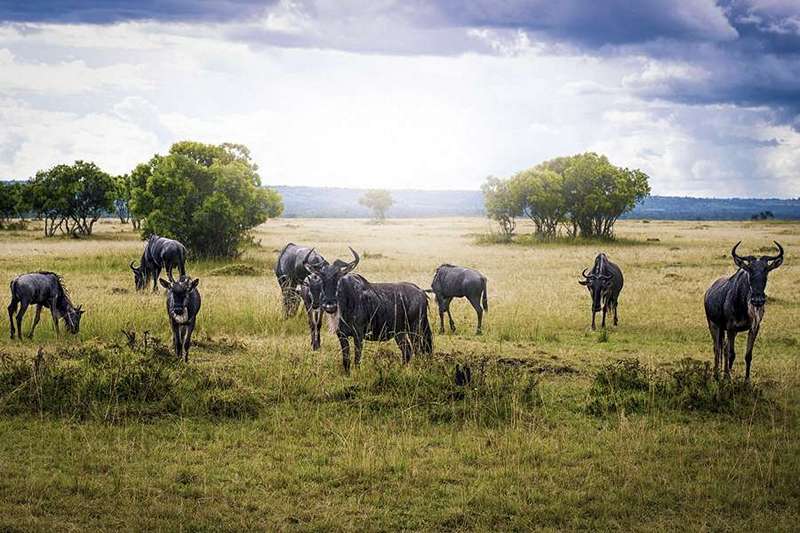
For roughly three to four months, the Mara pulsates with the rhythm of hooves and snorts. Witnessing this spectacle is like stepping into a wildlife documentary. Imagine vast plains teeming with over two million wildebeest, zebra, and gazelle, a sea of life thundering toward greener pastures. It’s a breathtaking reminder of the power of nature’s instincts.
By late October or early November, the tide starts to turn. The rains subside, and the herds are drawn back to the Serengeti, where the cycle begins anew. So, when planning your Masai Mara adventure, remember – flexibility is key. Pack your binoculars, a sense of wonder, and be prepared for an unforgettable show, whenever the curtain rises.
The wildebeest migration isn’t just confined to a single month, it’s a grand saga that unfolds across several acts under the African sun. While the entire spectacle is captivating, July marks the crescendo, the heart-pounding moment when the drama kicks into high gear.
Imagine the scene: the savanna simmers under the July sun, anticipation hangs heavy in the air, and the ground tremors with the distant rumble of hooves. Over on the horizon, a dark cloud appears, growing larger, morphing into an ocean of movement – a million-strong army of wildebeest, driven by an ancient instinct, charging towards the Mara River.
This is the essence of July in the Masai Mara. Witnessing the first wave of wildebeest plunge into the churning waters, crocodiles lurking just beneath the surface, is an experience etched in adrenaline and awe. It’s a primal ballet of survival, a testament to the raw power of nature’s grand design.
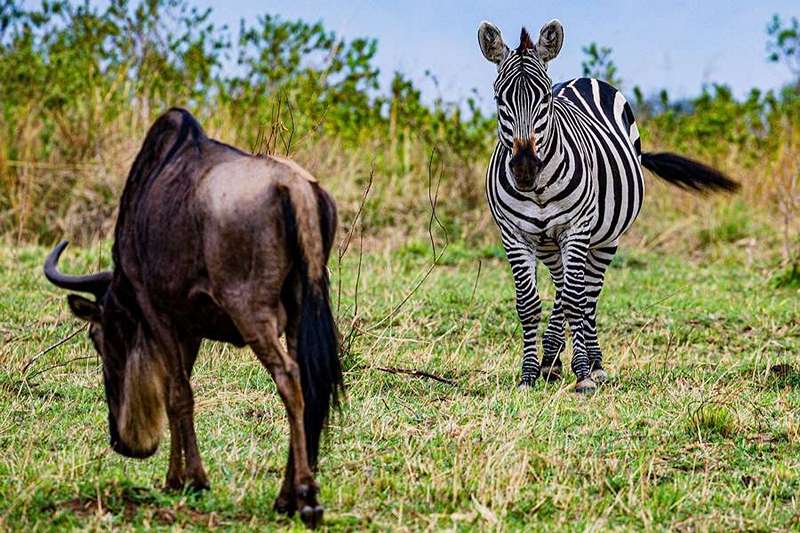
But July isn’t just about the dramatic crossings. It’s the month the Mara truly bursts with life. Zebra stripes interlace with the wildebeest’s dusty brown, creating a moving tapestry across the plains. The air throbs with the snorts and bellows of these migrating masses, a constant symphony of anticipation and survival.
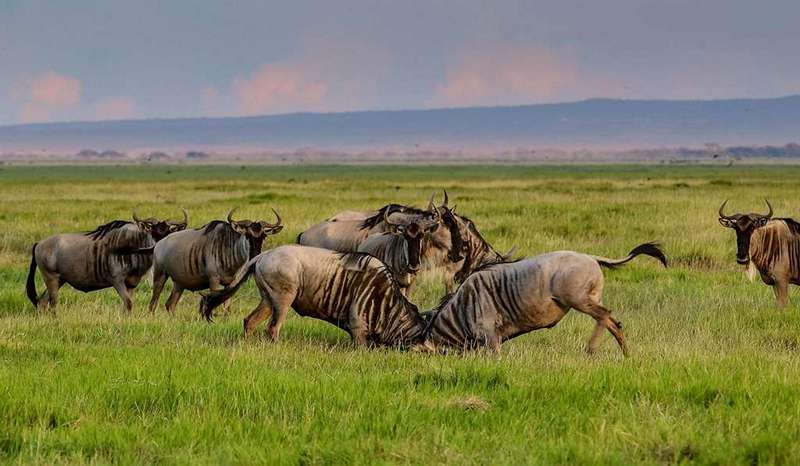
For the next three to four months, the Mara becomes a stage for this spectacular show. You’ll witness mothers nuzzling their newborn calves, young males testing their strength in mock battles, and predators lurking on the fringe, forever opportunistic in this land of constant movement.
By late October or early November, the curtain slowly falls. The rains subside, and the Mara’s lush grass diminishes, drawing the herds back to the greener pastures of the Serengeti. But the memory of July, the month of thundering hooves and breathtaking river crossings, will forever echo in the minds of those who witnessed it.
So, while the migration might not be confined to July, it’s this month that holds the key to witnessing its most dramatic act. If you’re seeking an adventure steeped in raw beauty and the primal pulse of nature, July in the Masai Mara is the experience you crave. Don’t miss the curtain rise on this awe-inspiring symphony of the wild.
The Great Migration in Kenya is an awe-inspiring natural phenomenon that occurs from July to October. This period is widely considered the pinnacle of migration safaris, as it is marked by numerous river crossings. During these months, herds of animals traverse between Tanzania’s Serengeti and Kenya’s Maasai Mara, providing the optimal opportunity to witness a river crossing.
In late June 2024, the first tremors begin. A distant rumbling that slowly crescendos into a thunderous symphony of hooves. The wildebeest, a million strong, stir from Serengeti, drawn by the lush grasslands that shimmer on the horizon. This is the Mara’s calling, and they answer with an unstoppable pulse.
July 2024 becomes a stage for nature’s most daring act. The Mara River, swollen and treacherous, stands between the wildebeests and their verdant Eden. Witness the heart-stopping plunge into the churning water, a test of courage against lurking crocodiles. Watch as they fight the current, muscles straining, a ballet of survival etched in sweat and dust.
But the Mara offers more than just perilous crossings. From July through August 2024, the savanna becomes a canvas of life. The plains teem with a million stories: mothers nuzzling newborn calves, young males sparring in mock battles, and the ever-present shadow of predators waiting for a moment of vulnerability. Every snort, every bellow, becomes a chorus of migration, a lullaby of survival sung under the endless African sky.
The drama doesn’t end with the first act. Around the last fortnight of October, the Mara hums with a different energy. The rains have subsided, the grass thinned, and the wildebeest feel the pull back to the Serengeti. They retrace their steps, a river crossing in reverse, carrying the memories of the Mara in their dusty coats.
Until early November 2024, you can witness this exodus, a final chapter before the curtain falls. It’s a slower, more contemplative act, but no less mesmerizing. The sight of thousands of wildebeest marching across the plains, a tide receding from the shore, reminds us of the cyclical nature of life, the constant ebb and flow of the wild.
Therefore, these intervals – late June to August for the northward journey and the last fortnight of October through early November for their return – paint the prime canvas for witnessing the 2024 wildebeest migration in the Masai Mara. Come, feel the earth tremble beneath your feet, hear the symphony of hooves in your heart, and witness the breathtaking saga of a million lives in motion. This is no mere spectacle; it’s a story etched in the very soul of the Mara, waiting to be experienced.
The migration from the Serengeti to the Masai Mara is part of a larger migratory cycle. This route starts from the Ngorongoro Conservation Area in the southern Serengeti of Tanzania, passes through the Serengeti, enters the Masai Mara in Kenya, and then retraces its steps back.
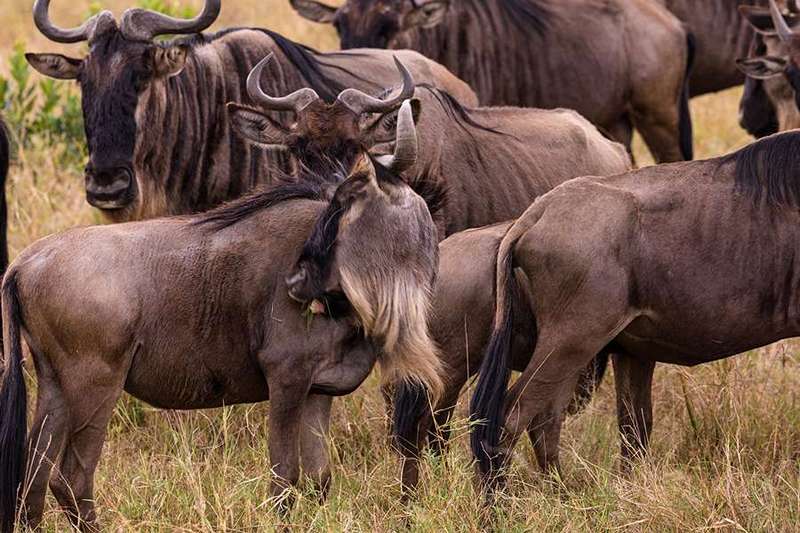
The migration is characterized by the movement of large herds of wildebeest, and some zebras in search of greener pastures. It is a perilous journey fraught with danger as the animals have to cross crocodile-infested rivers and evade predators such as lions and hyenas. The spectacle of the migration is a marvel to behold, and it attracts thousands of tourists every year.
Due to its altitude, the Masai Mara National Reserve experiences a slightly cooler and damper climate than one might expect for a location near the equator. Daytime temperatures hover in the mid to high twenties Celsius, while nighttime ushers in a significant drop in temperature. During the dry season, which spans June to October, temperatures can drop to around 12°C/54°F in the evenings and early mornings. Conversely, the wet season, from November to May, sees early morning temperatures near 13°C/55°F. Thus, the chilliest temperatures are typically encountered during the dry season.

 Talk to us on WhatsApp